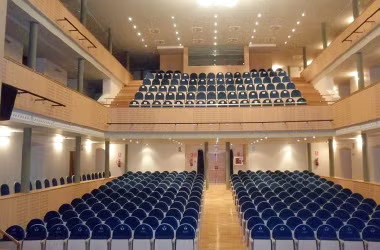
Choosing the best projector or the newest surround sound system isn’t enough to create the ideal home theatre—you also need to create an immersive audio experience without disturbing your neighbours on movie nights. The key to turning a plain space into a cinematic space is soundproofing your home theatre. The home theatre acoustic panels can significantly enhance sound quality while keeping noise low. Such panels from KTS can be game-changers for optimising the layout and design of your space.
Why does choosing the right sound treatment matter for your home theatre?
When you build a home theatre, a good home theatre screen, speakers, etc., represent only a small part of the final design and comfort. Minus proper acoustic treatments and thoughtful layouts, you risk –
- Echoes and reverberations can easily degrade overall sound quality, blur dialogue, and muddle sound effects.
- Sound leakages from audio spills can occur in neighbouring rooms and houses. This causes discomfort for your family and neighbours.
- Uneven or unbalanced sounds may occur, resulting in a bass boom in one corner and muddled dialogue.
As a result, the overall immersive and cinematic experience may be impacted. This is why choosing the best home theatre acoustic panels is so essential.
With these panels, you can expect the following benefits: –
- These are designed from sound-absorbing materials, typically with a frame filled with absorptive materials such as mineral wool, fibreglass, open-cell foam, etc.
- These panels absorb sound energy when sound waves strike their surfaces. This converts energy into heat instead of letting it continuously hit or bounce around the house.
- These also reduce echoes, reverberations, and reflections—necessary for improving sound clarity and balancing frequencies like bass, mids, and highs—and make dialogues and effects appear richer and more distinct.
Hence, these do not block the sound entirely but treat the sound within the room to improve quality and comfort.
Layout and installation tips
A few general guidelines will help to optimise these acoustic treatments –
- Treat the reflection points on the side walls. These are areas where sound from speakers first hits the walls. A good idea is to sit in your central spot and ask someone to slide a mirror on the adjoining walls. The place where speaker reflection becomes visible is the ideal place for placing your panel.
- Place bass traps on the corners. These places tend to accumulate low-frequency energy, delivering better bass control.
- On the front wall – place these panels behind a perforated projection screen. This helps to control reflection from front-facing speakers and supports dialogue clarity.
- On the rear wall, diffusion panels work well with these scattered sounds. This helps to avoid dead spots and makes surround sound appear more natural.
- Consider ceiling treatment, especially if your room has high ceilings. Choose ceiling-mounted acoustic clouds or panels, as these help capture vertical reflections that can affect sound quality.
Hence, by covering around 15-25% of the total area, you can expect noticeable improvements.
How can KTS solutions make a difference?
With the KTS finishing division services, you can expect treatment of walls, ceilings, floors, etc. Such experienced professionals offer solutions that directly impact acoustics. For the best results –
- Use wall-mounted KTS acoustic panels as a part of your wall finishing. This offers value and aesthetic appeal.
- Fabric-wrapped panels are available in a variety of colours and textures, making them compatible with home theatre decor.
- Design a false ceiling using acoustic panels to control overhead reflections. KTS helps to integrate these with lighting and other finishes.
- Choose floor materials carefully, as rigid surfaces reflect sound and carpets can absorb high frequencies. It is important to improve comfort.
- Plan the seating layout and speaker positions before finishing. This is vital to optimize panel placements, reflection points and bass trap corners
Such a well-planned finishing phase can avoid acoustic problems later.


Leave a Reply